
Evidence Check
Massage for stress and anxiety: what it can and cannot do
A 37-study meta-analysis says one session reliably calms the body for about an hour. Past that hour, the marketing and the data start to part company.
The short answer
Yes, within limits. A pooled analysis of 37 randomized studies found one massage lowers state anxiety, heart rate, and blood pressure, and a full course moved trait anxiety and depression further. Sessions of 60 minutes beat half-hour ones in a dosing trial. Cortisol did not drop, and massage is an add-on to standard care rather than a replacement for it.
- pooled in the 2004 Psychological Bulletin meta-analysis
- 37 studies
- beat half-hour sessions in a neck-pain dosing trial
- 60 minutes
- the session frequency behind that improvement
- 2–3 a week
- of chair massage lowered systolic and diastolic pressure
- 15 minutes
- how long part of one trial's anxiety drop lasted
- 24 hours
- from single sessions in the 37-study pooled analysis
- No cortisol drop
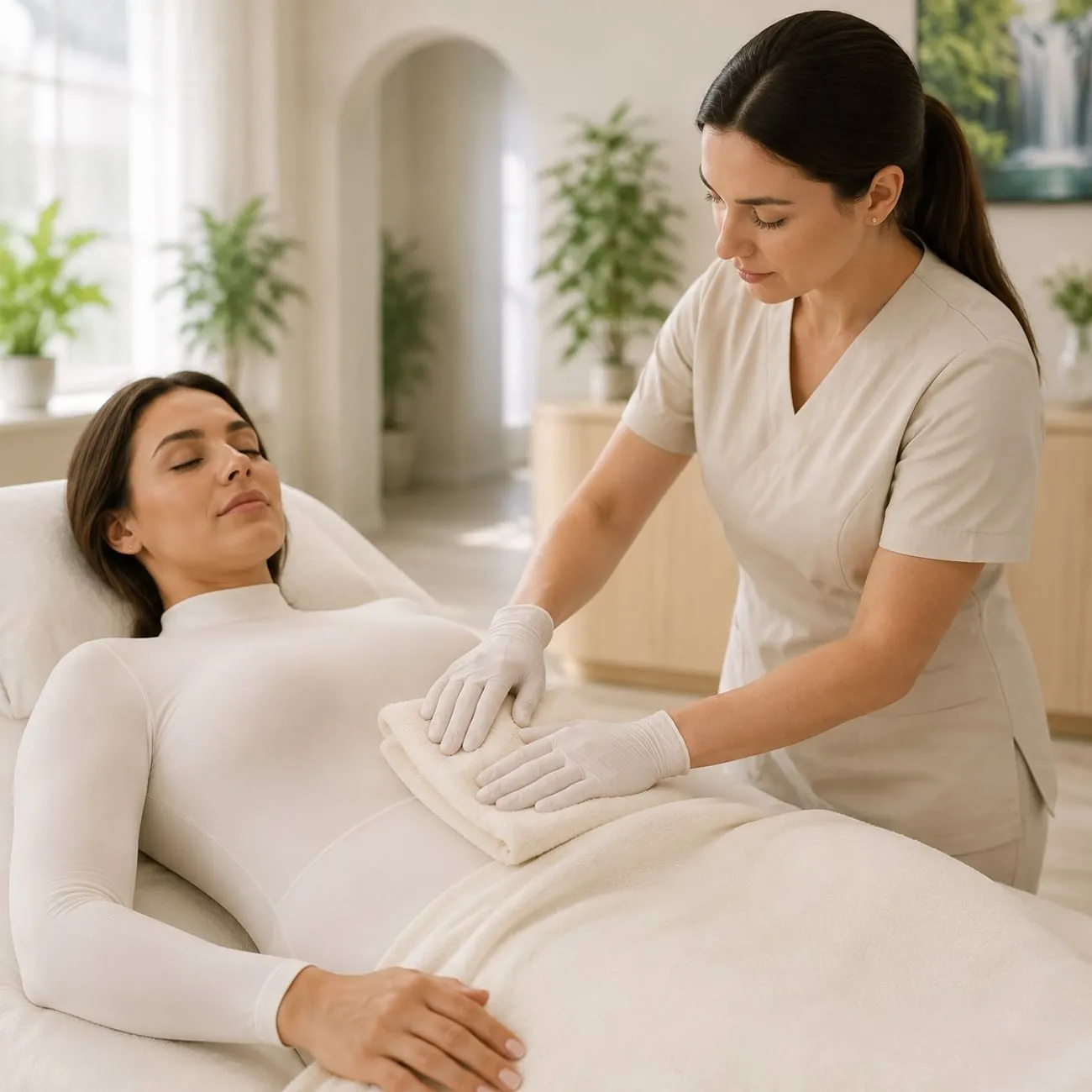
What does massage really do for stress and anxiety?
It reliably lowers three things: how anxious you feel in the moment, your heart rate, and your blood pressure. In 2004 a meta-analysis in the American Psychological Association's Psychological Bulletin pooled 37 randomized studies of massage therapy and found exactly that from a single session. The same pooling found no reduction in negative mood, in pain measured immediately afterward, or in cortisol.
Both halves of that result belong in a booking decision, and most writing about massage for stress and anxiety keeps only the flattering half. The difference matters to anyone weighing whether an hour on a table is a reasonable thing to do about anxiety or depression they carry every day.
Below: the machinery stress runs on, the effects that survive pooling across 37 trials, and the claims that do not. Then the practical part — dose, expectations, safety. It sits alongside the rest of our evidence-checked wellness guides, which all follow one rule — cite it or cut it.
What is stress doing to your body in the first place?
It speeds the body up. The National Center for Complementary and Integrative Health (NCCIH) describes stress as a physical and emotional reaction to life's challenges, and the fight-or-flight response in plain terms: heart rate climbs, breathing quickens, blood pressure rises, muscles tense, and you sweat more. The agency treats occasional stress as ordinary coping. Its warnings are for chronic stress, which it links to digestive disorders, headaches, sleep disorders, worsened asthma, depression and anxiety.
The counterweight has a name too. NCCIH calls it the relaxation response, the body's built-in reset: it slows heart rate, lowers blood pressure, and decreases oxygen consumption and stress-hormone levels. Yoga, mindfulness and relaxation techniques are the agency's examples of ways people trigger it on purpose.
Massage belongs in that conversation because the markers a session reliably moves are the same markers the relaxation response is defined by. That is the strongest version of the case, and it is worth stating cleanly before complicating it.
Which effects hold up across the trials?
Five, split by dose. Across 37 randomized studies, Moyer's 2004 meta-analysis found single applications of massage reduced state anxiety — how anxious you feel right now — along with blood pressure and heart rate. Multiple applications reduced delayed assessments of pain. The largest effects landed on trait anxiety — the general tendency toward anxiousness — and on depression. There, a full course produced benefits the authors called similar in magnitude to psychotherapy.
That psychotherapy comparison gets quoted a great deal and deserves a footnote rather than a victory lap. The authors frame it as a reason to study massage through a psychotherapy lens, not as proof that an hour on the table equals a course of therapy.
For about an hour, massage nudges down heart rate, blood pressure and how anxious a person feels in the moment, and that much the pooled trials support.
What the smaller studies add
The American Massage Therapy Association (AMTA) position statement points to research across varied populations showing benefit for anxiety, depression, lowered blood pressure, heart rate and decreased pain. The individual studies behind it are small and consistent with each other. A pilot study on a young-adult psychiatric inpatient unit recorded a significant drop in self-reported anxiety, resting heart rate and cortisol immediately after sessions. A workplace study measured a significant fall in systolic and diastolic blood pressure after one 15-minute on-site chair massage. A randomized trial of chair massage for people withdrawing from psychoactive drugs cut state anxiety more than a relaxation control did, with part of that effect still measurable 24 hours later.
The mechanism Mayo Clinic describes
Mayo Clinic credits endorphins, the body's natural painkillers, and says massage can reduce heart rate and may affect the immune system. Several studies, Mayo notes, show measurable changes in the body, including a decrease in some stress chemicals. On heart health specifically, Mayo says massage has been shown to help lower blood pressure and manage stress, both of which support the heart. Those are the claims a reader can lean on.
Does massage lower cortisol?
Probably not from one session. The 2004 pooling of 37 trials found that single applications of massage did not reduce cortisol, which is awkward, since cortisol is the hormone spa marketing most likes to name.
Mayo's patient-facing article states that an hour on the table lowers cortisol while releasing serotonin. Mayo's own longer review is more careful, saying several studies suggest a decrease in some stress chemicals such as cortisol. The lab work underneath is genuinely split: a preliminary study of one Swedish massage session against a light-touch control found only a small-effect-size drop, and a randomized trial in women with breast cancer found massage lowered heart rate and systolic blood pressure while showing no cortisol effect at all.
So read a "lowers your cortisol" line as the weakest link in the chain rather than the headline. The heart-rate and blood-pressure findings rest on much firmer ground, and honest sources say which is which.
Two neighboring claims deserve the same handling. The idea that massage reliably raises serotonin comes from patient-education material rather than pooled trial data. The idea that it boosts immune function rests on small studies the AMTA itself labels preliminary and in need of replication.
| Claim | What the research shows | How solid |
|---|---|---|
| Lowers in-the-moment (state) anxiety | Reduced by single sessions across the 37-study pooled analysis | Strong |
| Lowers heart rate and blood pressure | Reduced by single sessions; even a 15-minute chair massage lowered systolic and diastolic readings | Strong |
| Eases trait anxiety and depression | Largest effects in the 2004 pooled analysis — after a full course of sessions, not one visit | Moderate; needs repetition |
| Lowers cortisol | Single sessions showed no cortisol reduction in the 37-study pooled analysis; lab findings are mixed | Weak and inconsistent |
| Raises serotonin, boosts immunity | Comes from patient-education pages and small preliminary studies awaiting replication | Preliminary |
How much of the benefit is the room rather than the hands?
Nobody can separate the two cleanly, and the better sources say so. Mayo lays out the reasons massage works as a list, and structured manipulation of muscle and tissue is only the first item. The rest is context: a safe, quiet, pleasant space, often aromatherapy and soft music, sometimes plants and natural elements. Then there is human touch and a relationship with the therapist — care, comfort, a sense of empowerment, connection. What researchers find most consistently across massage studies, Mayo notes, is that people report their overall well-being improved.
The trial designs back the point up. Many of the studies above compared massage not against nothing but against an attention or relaxation control: quiet time, a visit to talk, light touch. Massage often still came out ahead. It also means the fair comparison is massage against other calming things, not massage against an ordinary stressed afternoon.
None of that makes the benefit fake. A drop in blood pressure is a drop in blood pressure whichever ingredient produced it. If part of what helps you is a quiet room and somebody paying attention for an unhurried hour, that reframes what you are buying without discrediting it.
The quiet room and the unhurried attention are part of the active dose rather than the packaging around it.
Can massage replace therapy or medication?
No, and the responsible sources are unanimous about it. Mayo's review says a massage may help you relax but cannot cure everything that ails you, and that massages should not replace conventional medical care. As with any integrative therapy, you tell your doctor you are trying it and you keep your standard treatment running. The Mayo Clinic Health System article on massage for depression, anxiety and stress, written by a practicing massage therapist, calls massage an effective part of treatment for people carrying those conditions.
The evidence fits that caution. The studies showing massage's largest effects on trait anxiety and depression ran full courses delivered alongside standard care — concurrent counseling and medication in the drug-withdrawal trial, usual psychiatric care in the inpatient study. Massage performed well as an addition, and it was rarely tested as a substitute for anything.
How do you use this without fooling yourself?
Match the tool to the job. If you carry diagnosed anxiety or depression, fold massage in alongside the care you already have and tell the clinician managing that care. If you mainly want relief from a tight, stressful stretch, the in-the-moment effects are the dependable part: lower heart rate, lower blood pressure, less felt anxiety for a while afterward. In the chair-massage withdrawal trial, part of that anxiety drop was still measurable a day later. If the stress is wrecking your nights in particular, the same clear-eyed logic applies there too.
Check the safety list before booking anything, because massage does not suit everyone. You should not feel significant pain on the table; if the pressure hurts, say so and ask for less. NCCIH adds that high blood pressure is a conversation to have with your provider rather than something to manage with an integrative approach alone. Mayo says to talk to your doctor first after a recent heart attack, with a bleeding disorder, or on blood thinners. Be cautious too after a recent blood clot in the leg, and with newer burns, fractures or severe osteoporosis. Massage should not be applied directly to tumors, healing wounds or areas with nerve damage.
Put together, using massage for stress and anxiety wisely comes down to a short sequence:
Dose is a real variable
A neck-pain dosing trial found sessions of 30 minutes were no better than a waitlist, while sessions of 60 minutes, 2 or 3 times a week, produced meaningful improvement. The trait-anxiety and depression effects showed up after a course of sessions rather than a single visit. On our own menu that maps to the 60 minute Body Massage at $90 instead of the 45 minute option at $80, and to putting the next appointment in the calendar before you leave.
What to ask for before you lie down
Say where you carry the tension and how firm you want the work, then say it again on the table if the pressure is wrong. Body Massage at Organic Day Spa is Swedish or deep tissue inside the same booking, so ask for the pressure you want at the start of the session. A good intake sounds like questions: where it hurts, what you did to it, what you want left alone. A good room is quiet, warm and private enough that you stop bracing. If nobody asks and nothing changes when you speak up, that tells you plenty about the studio.
- Clear the safety list first — if any of the cautions above apply to you, that is a conversation with your doctor before you book.
- Tell the clinician managing any anxiety or depression care that you are adding massage, and keep your standard treatment running unchanged.
- Book a real dose — 60 minutes rather than 30 — and plan on a course of sessions instead of a single visit.
- On the table, speak up if the pressure hurts; significant pain is not part of the treatment.
- Judge the result by what massage reliably delivers: a calmer hour of lower heart rate, blood pressure and felt anxiety.
Questions people ask
Does massage lower cortisol?
The evidence is mixed. The 2004 pooled analysis of 37 randomized studies found single massage sessions did not reduce cortisol. One Swedish-massage study found only a small drop against a light-touch control, and a breast-cancer trial found no cortisol effect at all. The heart-rate and blood-pressure reductions rest on much firmer ground, so treat the cortisol claim as the weakest link rather than the headline.
Can massage replace therapy or medication for anxiety or depression?
No. Mayo Clinic is explicit that massage should not replace conventional medical care. The largest effects in the 37-study pooling — those on trait anxiety and depression — came from full courses of massage delivered alongside standard care: counseling, medication, or usual psychiatric treatment. Massage performed well as an addition, and it was rarely tested as a substitute.
How much massage does it take to see a benefit?
Dose matters. In a neck-pain dosing trial, half-hour sessions were no better than a waitlist, while sessions of 60 minutes, 2 or 3 times a week, produced meaningful improvement. The trait-anxiety and depression effects in the research appeared after a course of sessions, not a single visit, so one appointment is a reset and repetition is what carried the longer benefit.
How long do the calming effects of one massage last?
The reliable effects are in the moment: lower state anxiety, heart rate and blood pressure during the session and shortly after. Those are the three markers single sessions moved across the 37-study analysis. In one randomized trial of chair massage for people withdrawing from psychoactive drugs, part of the anxiety reduction lasted up to 24 hours. Beyond that window, single-session studies make no promises.
What does a stress-relief massage in Palo Alto cost?
At Organic Day Spa, 200 California Avenue, Suite 180, a Body Massage runs $80 for 45 minutes, $90 for 60 minutes, $135 for 90 minutes and $180 for 120 minutes, in Swedish or deep tissue at the pressure you ask for. Organic massage oil, hot towels and a hot stone add-on are included. Call (650) 567-8886 or book online to hold a time.
Who should talk to a doctor before booking a massage?
Mayo Clinic advises checking with your doctor first after a recent heart attack, with a bleeding disorder, or on blood thinners. Be cautious too with a recent blood clot in the leg, newer burns, fractures or severe osteoporosis. Massage should not be done directly on tumors, healing wounds, or areas with nerve damage, and it should never be significantly painful.
Sources
- National Center for Complementary and Integrative Health — Stress
- Mayo Clinic Health System — Massage helps anxiety, depression
- Mayo Clinic Press — The role of massage therapy for mental health
- American Massage Therapy Association — Massage Can Improve Health and Wellness
Written and fact-checked by the Organic Day Spa editorial team against the primary sources above. Sessions at our Palo Alto studio are performed by experienced massage therapists at 200 California Avenue, Suite 180.
This guide is for general education only and is not medical advice. Talk with your healthcare provider about what is right for you.
Last reviewed . Published .
From evidence to appointment
Book the dose the research used, here in Palo Alto.
The dosing trial is worth taking seriously: 60-minute sessions produced meaningful improvement where half-hour ones did not. A Body Massage at Organic Day Spa runs 45 to 120 minutes, with the hour at $90, in Swedish or deep tissue at the pressure you ask for. It may help you unwind, and it is not a treatment for anxiety or depression or a replacement for care you already receive.
Organic Day Spa · 200 California Ave Ste 180, Palo Alto, CA 94306 · (650) 567-8886 · Open daily · 9:30 AM – 9:30 PM (Mon from 10:30 AM)