
Evidence Check
Does massage help back pain? What the studies show
Twenty-five studies, 3,096 patients, one honest answer: the relief is real, modest and mostly short-term. Here is what the research supports for back and neck pain, and how long a session has to run.
The short answer
Does massage help back pain? Yes, but the relief is modest and mostly short-term. A 2015 Cochrane review pooling 25 studies and 3,096 patients found massage eased low-back pain right after treatment, on low-quality evidence, with long-term effects unestablished. For chronic neck pain, sessions of 60 minutes two or three times a week beat 30 minute ones.
- pooled in the 2015 Cochrane review of low-back pain
- 25 studies
- in those trials; relief was real but short-term
- 3,096 patients
- session length that beat shorter massages for neck pain
- 60 minutes
- in the 2011 trial: relaxation massage matched structural
- 401 adults
- across 12 neck and shoulder studies reviewed in 2013
- 757 participants
- of U.S. adults got a massage in 2022
- 10.9%
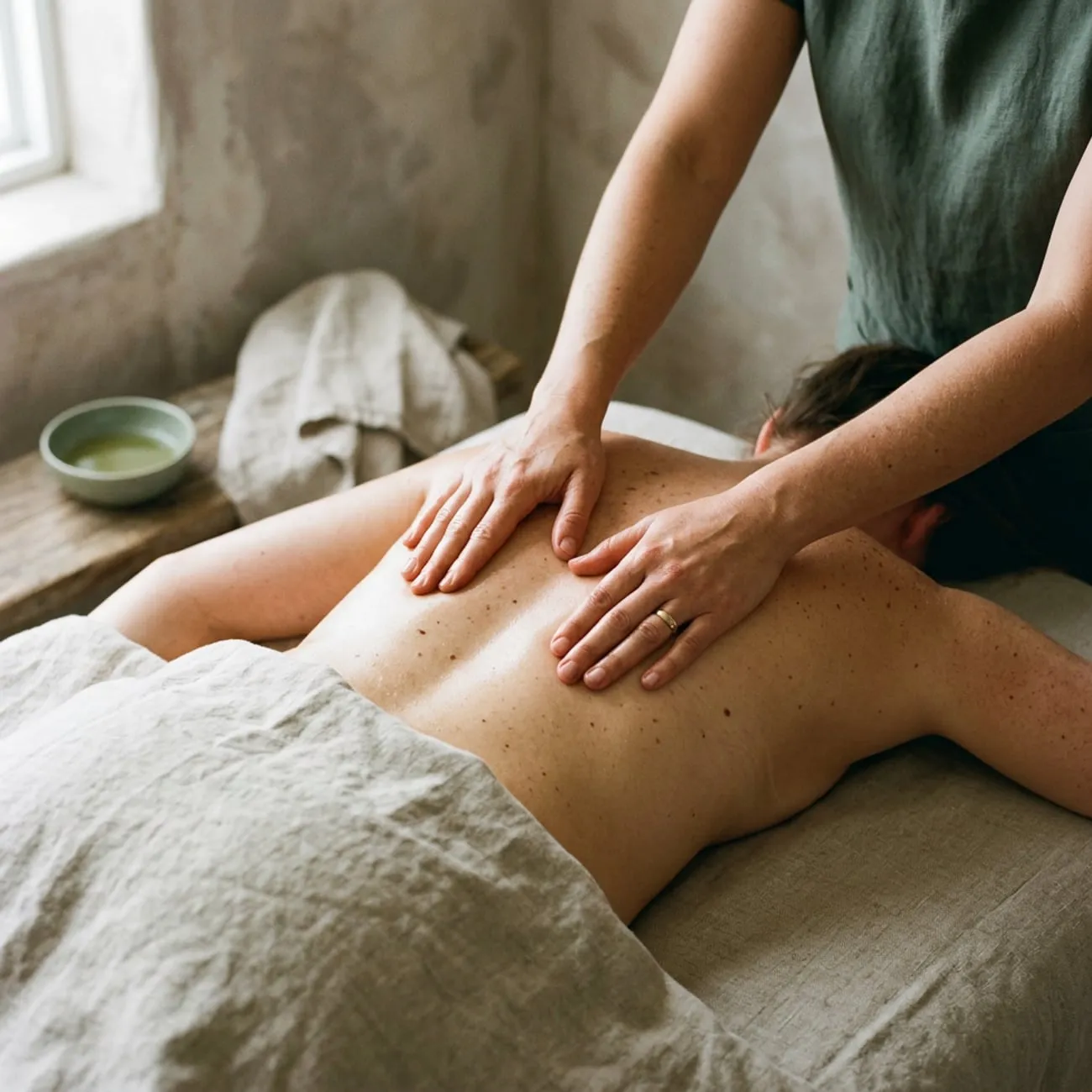
Does massage help back pain, in one paragraph?
Massage tends to ease back pain for days or weeks, and the evidence behind that is weak. In 2015, Cochrane reviewers pooled 25 studies on massage for low-back pain, covering 3,096 patients between them. The finding was modest, and worth reading before you book anything. Patients did report less pain shortly after treatment. But the underlying studies were of such poor quality that the reviewers said they had "very little confidence" massage is an effective treatment for low-back pain. That summary, cited by the National Center for Complementary and Integrative Health (NCCIH), is where any honest version of this article has to start.
Review teams have been picking over the question since at least 2012, for the neck as much as the lower back, and the answer has never resolved into a clean yes or no. What the research does tell you is more useful: how much relief to expect, how long it lasts, and how long a session needs to run.
About 1 in 9 American adults gets a massage in a given year. National survey data cited by NCCIH put it at 10.9 percent in 2022, more than double the 4.8 percent recorded in 2002. Plenty of those people are reaching for a sore lower back or a stiff neck, so whether massage does anything for that pain, and for how long, is worth getting right.
What did the low-back pain research find?
Two large evidence reviews both found a benefit and both rated it weak. The Agency for Healthcare Research and Quality (AHRQ), in a 2016 evaluation of nondrug therapies for low-back pain, examined 20 studies comparing massage to usual care or other treatments. It found evidence that massage helped chronic low-back pain, but rated the strength of that evidence as low. The same review looked at 6 studies pitting different massage styles against each other and could not say whether any one type beats another.
Then there is the 2015 Cochrane review. Across both acute and chronic low-back pain, patients had short-term improvements in pain after massage, on studies too weak to carry much confidence. NCCIH's plain-language read is that evaluations of massage for low-back pain have found "only weak evidence that it may be helpful."
The 2011 trial that was designed better than most
A 2011 randomized controlled trial of 401 adults with nonspecific chronic low-back pain compared two kinds of massage, structural and relaxation, against usual care. At 10 weeks, both massage groups were doing meaningfully better on function and symptoms than the usual-care group. The relaxation-massage group scored 2.9 points lower on the Roland Disability Questionnaire, a standard measure where lower means less disability. Benefits on function still showed up at 52 weeks, though by then they were small.
The technical version did not win
Structural massage, with its targeted approach, was no better than plain relaxation massage in that trial. If a specific manipulation were correcting a specific mechanical problem, the technical version should have pulled ahead. It didn't. So the benefit probably does not come from a specialised technique. More likely it comes from general effects: lower muscle tension, a calmer nervous system, an hour spent not bracing.
How long does the relief from a massage last?
Days to weeks, and then it fades. Read enough of these summaries and one phrase repeats: short-term. Massage tends to help in the weeks right after a course of treatment. On the longer term the 2015 Cochrane review was blunt: those effects have not been established.
A trial cited in the American Massage Therapy Association's position statement shows the same pattern in a hospital setting. Researchers randomized 605 veterans recovering from major surgery to one of three tracks: routine care, brief individual attention, or evening back massages for up to 5 days. The massage group had faster short-term drops in pain intensity, pain unpleasantness and anxiety. What massage did not change was opioid use, length of stay or complications.
Short-term relief is still relief, and during a flare-up that is keeping you off your feet it can be the difference between a lost week and a manageable one. It also sets the right expectation. Treat a massage as a temporary reset rather than a repair, and the evidence and the experience stop contradicting each other.
Massage looks less like a structural fix that keeps pain from returning and more like a way to take the edge off during a bad stretch.
Where does massage sit in clinical guidelines?
For acute back pain, yes; for chronic, the guidelines stop short. The American College of Physicians (ACP) issued clinical practice guidelines in 2017 covering acute, subacute and chronic low-back pain. Massage made the list for acute and subacute pain, based on low-quality evidence. For chronic low-back pain, the ACP left massage off its recommended options entirely. That acute-versus-chronic split turns out to be the most practical line in the whole literature, and it is worth knowing which side your pain sits on before you book anything.
The wider trend still works in massage's favor. The CDC's 2022 opioid-prescribing guideline concluded that several noninvasive, nondrug treatments improve chronic pain and function, "with small to moderate effects in specific pain conditions." It also found them "not associated with serious harms." Massage therapy is named in that guideline as appropriate for some types of chronic pain, alongside acupuncture, tai chi, yoga and mindfulness. Read plainly: small to moderate effects at low risk, which is a reason to try massage as part of a plan rather than a promise it will solve the problem.
| Source | What it found | Evidence strength |
|---|---|---|
| 2015 Cochrane review (25 studies, 3,096 patients) | Short-term pain relief for acute and chronic low-back pain; long-term effects not established | “Very little confidence” — low-quality studies |
| AHRQ 2016 evaluation (20 studies) | Massage helped chronic low-back pain | Low strength of evidence |
| ACP 2017 guideline | Option for acute and subacute low-back pain only; not listed for chronic | Low-quality evidence |
| CDC 2022 opioid guideline | Nondrug treatments, massage included, improve chronic pain and function | Small to moderate effects; not associated with serious harms |
| 2013 neck & shoulder review (12 studies, 757 participants) | Better than inactive comparisons; no better than other active treatments | Shoulder benefit short-term only |
| 2012 Cochrane neck review (15 trials) | Effectiveness for neck pain remained uncertain | No recommendations for practice possible |
Does massage work better for neck and shoulder pain?
Slightly better, and still brief. A 2013 review of 12 studies (757 participants) found massage more helpful for neck and shoulder pain than inactive comparisons, but no better than other active treatments, and for shoulder pain specifically the benefit was short-term only. A 2016 review of 4 U.S. trials found massage could give short-term relief of neck pain, with a condition attached: the sessions had to be long enough and frequent enough.
A quick rubdown probably will not move the needle on chronic neck pain. Enough time on the table, repeated often, might.
The dose that worked in the trial
A 2014 trial randomized 228 people with chronic nonspecific neck pain to different doses of massage over four weeks, and the result was unusually specific. Sessions of 30 minutes, however often they happened, were no better than sitting on a wait list. What worked was 60 minute massages two or three times a week. Those longer, more frequent sessions raised the odds of a clinically meaningful improvement in neck function by roughly 3 to 5 times, and the odds on pain by about 2 to 3 times.
The review that disagreed
A 2012 Cochrane review of 15 neck-pain trials concluded that no recommendations for practice could be made, because the effectiveness of massage for neck pain remained uncertain. Even inside the neck literature, careful reviewers reading overlapping evidence land in different places, which is itself a signal that whatever effect exists is not large.
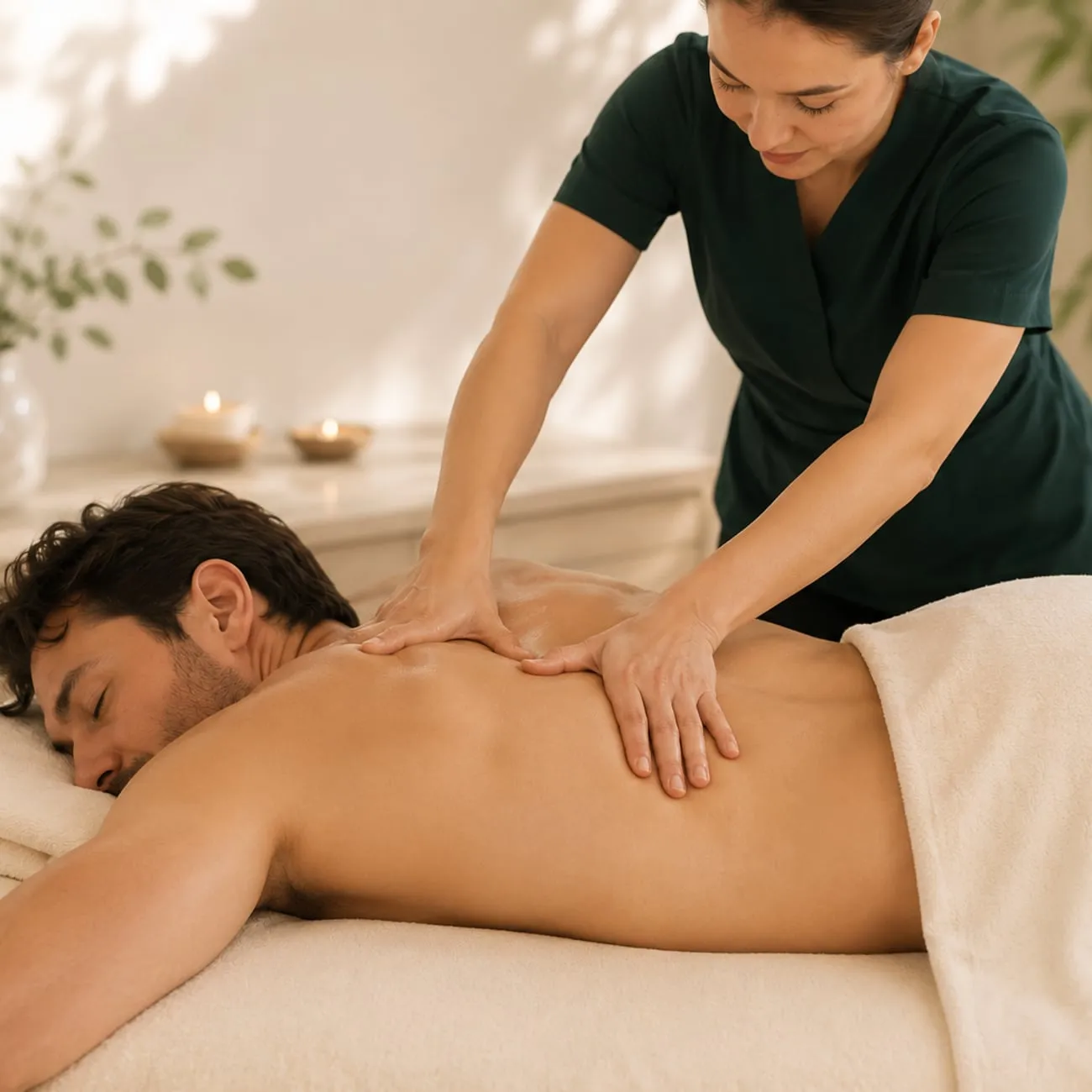
What is massage doing when it does help?
Something measurable, and not yet explained. The American Massage Therapy Association's position statement gathers the effects researchers have recorded: less anxiety and depression, lower blood pressure and heart rate, less pain. It also points to physiological changes measured after a single Swedish massage, including shifts in stress hormones and immune markers. A 2012 study found that massage of muscle damaged by exercise dialed down inflammatory signaling inside the tissue.
Measurable is not the same as understood. NCCIH, describing premature-infant research in which massaged babies gained more weight, states flatly that the mechanism "is not well understood." The 2011 back-pain trial supplies the clue: structural massage did no better than relaxation massage, which points away from a precise mechanical correction and toward the general effects of an hour of unhurried touch.
A meta-analysis cited in the American Massage Therapy Association (AMTA) position statement describes massage's largest effects as reductions in trait anxiety and depression, of a magnitude similar to psychotherapy. The most consistent thing massage does may be to calm you down, and calmer people tend to hurt less. That relocates where the benefit comes from without making it any less real.
Is it safe, and how should you fit it into a plan?
The risk is low and the role is supporting. NCCIH's read is that the risk of harmful effects from massage "appears to be low," which for a healthy adult is most of the story. Its broader chronic-pain guidance adds that people with medical conditions and people who are pregnant may need to modify or skip some approaches. Next to the risks of long-term opioid use, an occasional bruise is a different order of problem. That safety record is part of why massage keeps appearing in guidelines even though the effectiveness evidence is weak to modest.
Notice what massage is almost always measured against in these studies: usual care. Studies add massage to usual care and measure the difference. Across the 12 neck and shoulder studies in the 2013 review, massage beat doing nothing and tied with other active treatments. The ACP's 2017 guideline treats it as one option among many for acute back pain and leaves it off the chronic list, where the guidance points instead toward approaches like exercise and tai chi. That is how the guidelines mean it to be used.
NCCIH's other instruction is blunt: don't use massage to postpone seeing a clinician about a medical problem. With that said, here are the steps the research supports, in order.
- Place your pain on the acute-chronic line. Recent, short-lived back or neck pain is where massage has guideline support, the downside risk is low, and short-term relief is the documented effect.
- Set expectations to match. For chronic pain that means "this may help me feel better for a while," not "this will fix it" — the 2015 Cochrane review never established a long-term effect.
- Dose it properly. The 2014 trial of 228 people is the closest thing to a prescription: 60 minute sessions two or three times a week over 4 weeks, rather than one 30 minute appointment you hope will do the trick.
- Tell whoever manages your pain that you are trying it, especially if you have a condition that raises your risk during bodywork.
How do you book a session of that length in Palo Alto?
Ask for the length first and the style second. At Organic Day Spa, 200 California Avenue, Suite 180, Palo Alto, the Body Massage runs 45 to 120 minutes: 45 minutes is $80, a 60 minute session is $90, 75 minutes is $115, 90 minutes is $135 and 120 minutes is $180. Swedish and deep tissue are the same booking here rather than two separate prices, so the pressure is set by what you ask for at the start of the hour. Organic oil, hot towels and a hot stone add-on come with every massage at no extra charge.
If the sore spot is one shoulder or a band across the lower back, say so before you lie down, and say how firm you want the work. Booking is online or by phone on (650) 567-8886, seven days a week, and the studio is about a five-minute walk from the California Avenue Caltrain station if you would rather not park. None of this is medical care, and a back that has been hurting for months deserves a clinician's opinion before it gets an hour on a table.
Questions people ask
Does massage really help low-back pain?
The evidence supports modest, short-term relief. A 2015 Cochrane review of 25 studies (3,096 patients) found less pain shortly after treatment, but the studies were low quality and reviewers had very little confidence in massage as a treatment. A 2016 AHRQ evaluation of 20 studies reached a similar verdict: massage helped chronic low-back pain, on low-strength evidence. Long-term effects have not been established.
How long and how often should massage sessions be for neck pain?
A 2014 trial of 228 people with chronic neck pain, dosed over 4 weeks, found sessions of 30 minutes were no better than a wait list, no matter how often they happened. What worked was 60 minute massages, two or three times a week. That raised the odds of a clinically meaningful improvement in neck function by roughly 3 to 5 times, and the odds on pain by 2 to 3 times.
Is deep tissue or structural massage better than relaxation massage?
Not according to the best-designed trial. A 2011 study of 401 adults with chronic low-back pain found structural massage was no better than plain relaxation massage. Both beat usual care at 10 weeks. The relaxation group scored 2.9 points lower on the Roland Disability Questionnaire, and small benefits were still visible at 52 weeks. At Organic Day Spa both are the same Body Massage booking, so you choose the pressure rather than a different price.
Is massage safe for back and neck pain?
Generally yes — NCCIH says the risk of harmful effects appears to be low. Rare reports of serious harm (blood clots, nerve injury, fractures) cluster around vigorous techniques and people at higher risk of injury, such as older adults. If you are pregnant or have a medical condition, check with your clinician first, and never use massage to postpone medical care.
Will massage cure chronic back pain?
No. The 2017 American College of Physicians guideline lists massage only for acute and subacute low-back pain and leaves it off the chronic list entirely. For chronic pain, expect short-term relief at best and treat massage as a supplement to approaches with stronger long-term evidence, such as exercise and tai chi.
What should I tell the therapist when I arrive?
Three things: where the pain is, how long it has been there, and how firm you want the work. A useful intake conversation asks about all three before anyone touches you, and it should end with the therapist repeating the plan back to you. Say at any point during the hour if the pressure is more than you want; we would far rather adjust the pressure than have you tough it out.
Sources
- NCCIH — Massage Therapy for Health: What the Science Says
- NCCIH — Massage Therapy: What You Need To Know
- NCCIH — Chronic Pain and Complementary Health Approaches: Usefulness and Safety
- AMTA — Massage Can Improve Health and Wellness
Written and fact-checked by the Organic Day Spa editorial team against the primary sources above. Sessions at our Palo Alto studio are performed by experienced massage therapists at 200 California Avenue, Suite 180.
This guide is for general education only and is not medical advice. Talk with your healthcare provider about what is right for you.
Last reviewed . Published .
From the research to the table
Book the session length the research points to
The dosing research favors unhurried, repeated sessions. Our Body Massage runs 45 to 120 minutes on California Avenue in Palo Alto — 60 minutes at $90, 90 minutes at $135 — in Swedish or deep tissue at whatever pressure you ask for. Organic oil and a complimentary hot stone add-on are included. It may help take the edge off a rough stretch. It is not medical treatment, and it should never replace seeing your clinician about persistent pain.
Organic Day Spa · 200 California Ave Ste 180, Palo Alto, CA 94306 · (650) 567-8886 · Open daily · 9:30 AM – 9:30 PM (Mon from 10:30 AM)
Keep reading
Massage for stress and anxiety
Across 37 randomized trials anxiety and blood pressure fell after a single session. Cortisol did not.
Read
Body Massage — 45 to 120 minutes
The full ladder of session lengths, with the list price against each one.
Read
Deep tissue massage in Palo Alto
How firm pressure is handled here, and what to ask for at the start of the hour.
Read